| |
| Tuesday, 08 September 2026 |
| William McTaggart: The Water and the Light |
| Julia Marwood |
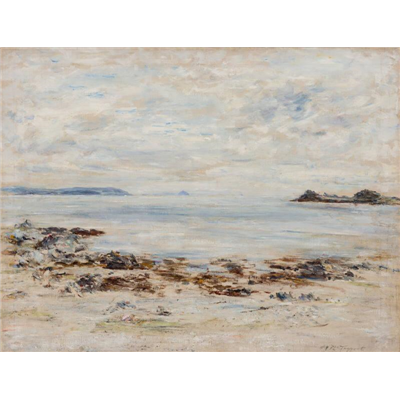 |
William McTaggart: The Water and the Light (image: The White Calm - Ailsa Craig from Port am Righ. 1901. Courtesy Aberdeen Art Gallery and Museum) Our opening lecture for session 2026/7 will be an exploration of Scottish Artist, William McTaggart's, body of work. McTaggart left his Gaelic homeland of Aros, Kintyre for life in Edinburgh but returned time and again to paint the majesty of the sea and the sky, and the lives of the people who remained after the devastation of the Clearances. This lecture will look at the rich and varied body of work he created throughout his long life and explore the reasons why he must be seen as one of the towering giants of Scottish art. i Julia Marwood: Biography Julia has loved looking at art since discovering the work of Gustav Klimt while teaching English in Austria as part of her German degree course at the University of Durham. She spent the first part of her career teaching German, then did a Master’s in Teaching English at the University of Manchester, and went on to teach international students in the city. She became a tour guide at Manchester Art Gallery in 2015 and after leaving language teaching in 2018 she has loved spending all her time sharing her passion for art as a speaker to many different groups - apart from when she is wild swimming or learning Scottish Gaelic! She became an Accredited Lecturer of The Arts Society in 2020, specialising in Scottish art from 1880 and the art of Manchester. She and her astronomer husband love to travel around Europe and take every opportunity to visit art galleries wherever they go, but Scotland has always been their favourite destination! me |
|
| Tuesday, 13 October 2026 |
| Time Machines: Clocks in Art and Literature from c1300 to Now. |
| Dr Christina Faraday |
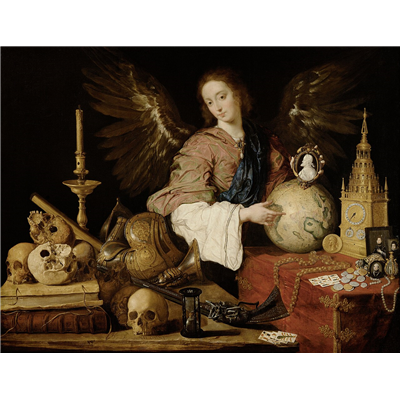 |
Time Machines: Clocks in Art and Literaturefrom C1300 to Now (image: Allegory of Vanity by Antonio de Pereda y Salgado . Between 1632-6. Kunsthistorisches Museum, Wein. Courtesy Wikimedia. Few people nowadays give more than a second thought to their clocks: practical, sometimes beautiful, evices that form the background noise of our daily lives. But from their introduction in the thirteenth century onwards, clocks have held a variety of philosophical and social meanings. This talk explores the visual and literary uses of the clock, the varied meanings it could hold throughout the ages: as an ominous symbol of oncoming death, but also as a metaphor for the soul, for capitalism, and for the good use of time. Dr Christina Faraday: Biography Dr Faraday, FRHistS, is a historian of art and ideas, specialising in Tudor and Stuart Britain and the wider 16th and 17th-century world. She is a Research Fellow in History of Art at Gonville and Caius College, Cambridge, a Trustee of the Walpole Society for British art history, and a BBC New Generation Thinker, appearing regularly on BBC Radio 3 and in other popular media. She is an experienced lecturer, and teaches for the History of Art Department at the University of Cambridge, The Wallace Collection, the National Gallery, London, and for the Institute for Continuing Education, Cambridge, where she is Co-Director of the MSt in History of Art and Visual Culture. Her first book, Tudor Liveliness: Vivid Art in Post-Reformation England, was published in 2023 by the Paul Mellon Centre and Yale University Press followed by The Story of Tudor Art, in 2025. |
|
| Tuesday, 03 November 2026 |
| Fashion in a Time of War: 1939-1945 |
| Connie Gray |
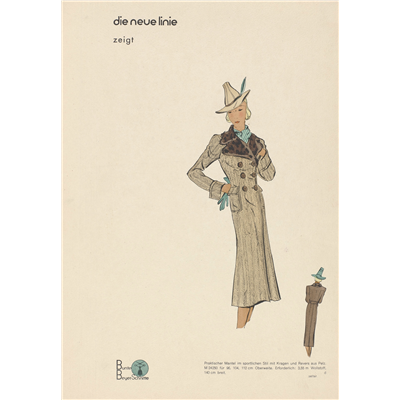 |
Image: Die Neue Line 1939 Bunte Beyer-Shritte. Anonymous. Fashion in a Time of War explores the role fashion played in London and Paris during the second World War. Names synonymous with elegance and style pre-war were to play significantly different roles during WWII, some better known than others. Coco Chanel took a German lover and was viewed as almost 'untouchable' until 1954, Hardy Amis became a British spy in Belgium and used the names of fashion accessories as code words to communicate with resistance groups, Lucien Lelong dressed the wives of the German high command during the occupation of Paris whilst working tirelessly to save the lives of thousands. Connie Gray: Biography: With a background in fashion and broadcasting, Connie Gray is the leading authority on the history of 20th-century fashion illustration. She is the author of GPP: One of a Kind (Gray M.C.A 2025), the definitive illustrated biography of Gladys Perint Palmer - the most influential female fashion artist of the modern era. As a curator, educator, and lecturer, she advises internationally on exhibition curation and collections research, and presents at institutions including Central Saint Martins and the Courtauld Institute of Art. Her research and writing focus on the evolution of fashion illustration, the visual rhetoric of wartime style, and the artistic legacies of key fashion artists. She has collaborated with major museums and archives on aquisition, conservation, and exhibition projects, including Pioneers of Fashion (Lee Miller Archives), Crown to Couture (Kensington Palace, London), and 100 Years of Fashion Illustration (Society of Illustrators, New York). |
|
| Tuesday, 08 December 2026 |
| The Origins of Christmas |
| Roger Askew |
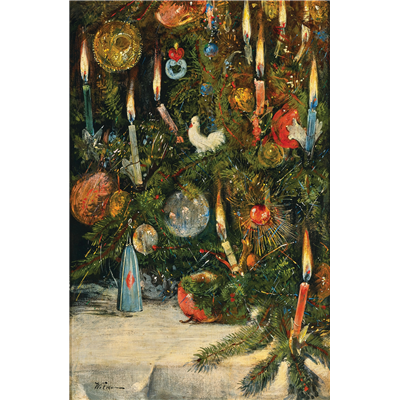 |
(image: Christmas Tree Decorated with Lights. Rudolph Bernhard Willmann 1868-1919. courtesy Ardvee). The origins of our Christmas stretch far back into European history, combining the pagan traditions of the Roman and Scandinavian winter festivals. Only in the 4th century AD did the Christian Church start to celebrate the birth of Christ. Since then these different cultures have co-existed, changing as the social and political landscape changed. Music, art and folk customs associated with the season have all evolved, producing a rich tapestry of imagery and events that have appealed to every strata in our society. Roger Askew: Biography: Roger was a chorister at Wells Cathedral School and a choral scholar at Magdalen College, Oxford, where he graduated with an honours degree in English. He combined a teaching career with professional singing in London, and after obtaining a further degree in Music became Director of Music at Daniel Stewart’s and Melville College in Edinburgh. After retiring in 2003 he returned to the south of England. He is President Emeritus of The Stoke Poges Society. |
|
| Tuesday, 12 January 2027 |
| Art in Artarctica |
| Henrietta Hammant |
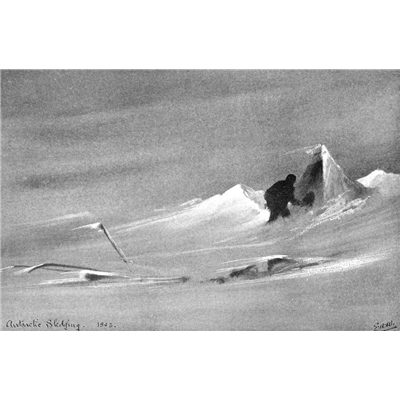 |
Image: Edward Wison 1903. Antarctic Sledge. The Worst journey in the Antarctic Wild 1910-13. Art in Antarctica Antarctica is the only continent on earth without an indigenous population, nevertheless, for almost as long as people have been exploring it, they have been making art. Discover carved whale teeth, scientific watercolours and Christmas decorations in this lecture about the many artistic responses to the icy continent. Dr Henrietta Hammant: Biography: Dr Henrietta Hammant is a museum anthropologist with a love of the polar regions. She holds degrees in Archaeology and Anthropology from the University of Cambridge, and Visual, Material and Museum Anthropology from the University of Oxford. Recently, she has completed her PhD in the Anthropology of Heritage at the University of Reading, with a focus on Heroic Age Antarctic explorers and their representation in British museums. She has worked in museums across Canada and the UK, including as Assistant Curator at the Itsanitaq Museum in Churchill, Manitoba, and Collections Coordinator at the Polar Museum, part of the Scott Polar Research Institute in Cambridge. She has visited Antarctic twice as a cruise ship lecturer, receiving audience reviews of 93%. She is now an Impact Fellow at the University of Nottingham, working to decolonise Nottingham City Museums and Galleries’ collection of North American ethnographic objects. |
|
| Tuesday, 09 February 2027 |
| The Scottish Colourists: Art & Life |
| Alice Strang |
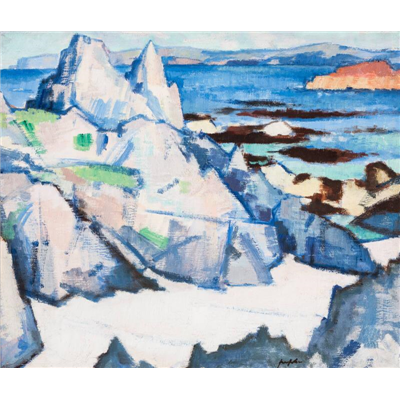 |
Image: The Cathedral Rock, Iona. 1920. Samuel John Peploe. Courtesy Aberdeen Art Gallery and Museum. Alice is a Senior Curator at the Scottish National Gallery of Modern Art. She will be publishing her book, The Scottish Colourists: Art & Life later this year. |
|
| Tuesday, 09 March 2027 |
| The Magic Flute - the Story of Mozart's famous Opera |
| Peter Medhurst |
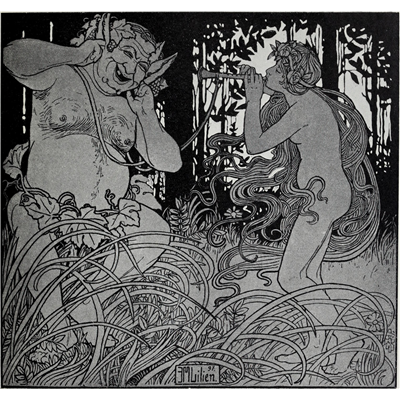 |
Image: Die Zauberflote by Ephraim Moses Lilien, late 19th early 20th C. Courtesy Wikimedia The Magic Flute is one of the best loved of all Mozart's operas and charms audiences as much today as it did those at the end of the 18th century. However, beneath the surface of the music are many complexities, ambiguities and hidden secrets, which when revealed may well enhance the listener’s understanding and enjoyment of the work. By following the progress of Tamino - the opera’s hero – Peter Medhurst shows that Mozart’s opera is one of the finest musical products of the enlightenment. Peter appears in the UK and abroad as a musician and scholar, giving recitals and delivering illustrated lectures on music and the arts. He studied singing and early keyboard instruments at the Royal College of Music and at the Mozarteum in Salzburg. |
|
| Tuesday, 13 April 2027 |
| Fashion, Fury & Feathers: Women's Fight for Change |
| Tessa Boase |
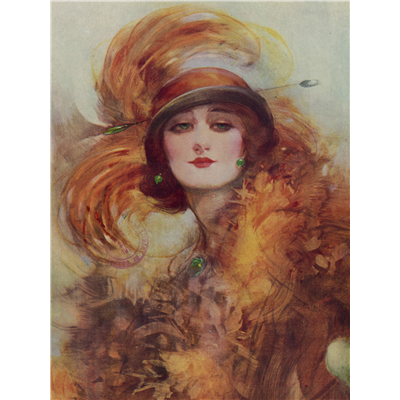 |
Image: The Lure of the Green Eyes. William H Barribal. 1914. Courtesty Library of Congress. When social historian Tessa Boase told the Royal Society for the Protection of Birds she wanted to write their early story, they refused to let her visit their archives. To a former investigative journalist, this was a challenge she could not resist . . . This lecture shines a light on the intriguing story of women’s love affair with plumage – and of the brave eco feminists who fought back on behalf of the birds. Moving from a polite Victorian tea party to an egret hunt in a Florida swamp; from a suffragette ‘monster rally’ to a milliner’s dusty workshop, you’ll be taken back in time to a world where every woman, of every class wore a hat. Tessa Boase is a freelance journalist, author, lecturer and campaigner with a particular interest in uncovering the stories of invisible women from the 19th and early 20th-centuries – revealing how they drove industry, propped up society and influenced politics. She’s the author of three books of social history: The Housekeeper’s Tale: The Women Who Really Ran the English Country House; Etta Lemon: The Woman Who Saved the Birds, and London’s Lost Department Stores: A Vanished World of Dazzle and Dreams. Since uncovering the feminist origins of the RSPB, Tessa has been campaigning for public recognition of its female founders with plaques, portraits and a statue. |
|
| Tuesday, 11 May 2027 |
| Carpets from the East in European Paintings |
| Dr Antonia Gatward Cevizili |
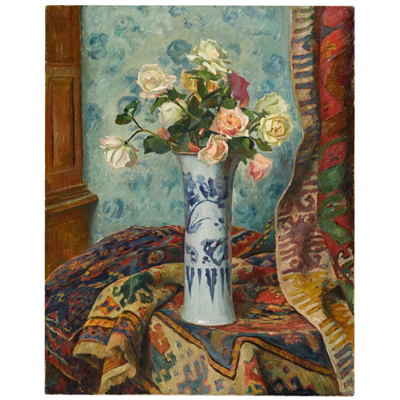 |
Image: Vase de Roses aux Tapis D'Orient. 1914. George-Daniel de Monfreid. (1856-1929). Courtesy Wikimedia. Carpets from the Islamic world are a common feature in many European paintings. This lecture investigates what these paintings can tell us about how carpets were used and regarded in Europe. They also offer insights into trade routes of the time as we witness carpets coming in from different regions of the East and reaching more distant parts of Europe. This is a story of taste, status and international trade from the 14th to the 17th century. Dr Antonia Gatward Cevizli is an independent art historian specialising in both Italian Renaissance art and Ottoman art. She gained her PhD from the University of Warwick. Her publications focus on cultural and diplomatic exchange between the Italian city-states and the Ottomans. Antonia has lectured for a number of institutions including Sabancı University, Istanbul; Sotheby’s Institute of Art; the National Gallery; the V&A Academy and The Courtauld summer school. Her interests are wide-ranging and she also worked across the collections of both Tate Modern and Tate Britain as a professional guide. She has lived in Siena, Venice and Istanbul. |
|
| Tuesday, 08 June 2027 |
| Impressions of Gardens |
| Dr Twigs Way |
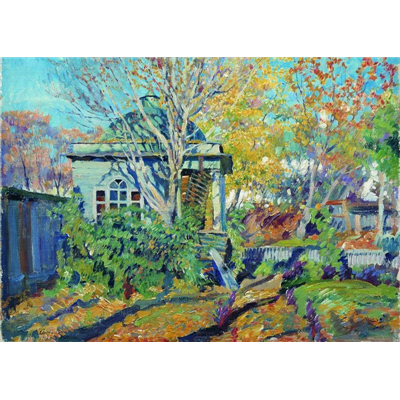 |
Image: The Garden by Sergey Vinogradov. pre 1938. The Athenaeum. Dr Twigs Way is a lecturer, researcher and writer in the history of gardens and designed landscapes. She writes, " I am fascinated by the past and intrigued by the role of gardens and landscape in society, art and culture. My academic research has concentrated on a range of topics including the role of women and gender in garden and landscape design of all periods, gardens of the working and middling classes and the impact of politics and war on design and production. Whether focussing on individual plants or centuries of garden culture, my work encompasses symbolism and meaning, class and gender, art and literature. From gnomes in Neasden to hollyhocks from the Holy Land, every plant has a tale to tell, every garden a past and every person a role in that past." Dr Way is currently Course Director for the University of Buckingham MA(Research) and PhD in Garden History. |
|